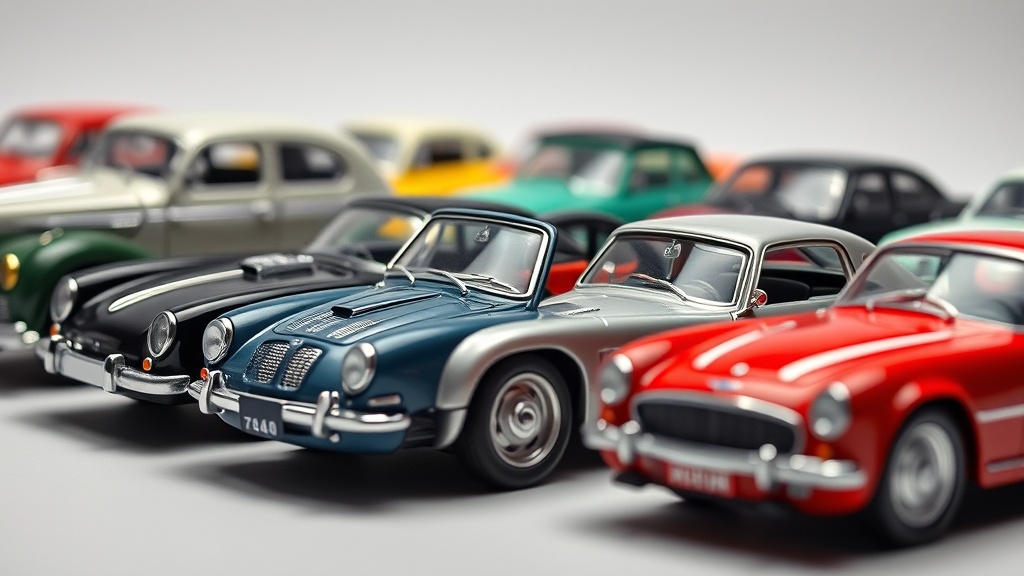
So, you’re looking to start collecting model cars? Fantastic! You’ve just stumbled upon a hobby that combines a love for automotive history, intricate craftsmanship, and the thrill of the hunt, and I’m thrilled to guide you through the initial steps.
Key Takeaways
- Passion First: Begin collecting models of cars you genuinely love. This ensures the hobby remains enjoyable and sustainable.
- Scale Matters: Understand the common scales (1:64, 1:43, 1:24, 1:18) and choose one that fits your space, budget, and desired level of detail.
- Budget Wisely: You don’t need to spend a fortune. There are fantastic budget-friendly options that offer great detail and quality.
- Research & Learn: Educate yourself about brands, materials, and potential pitfalls. This knowledge will save you time and money.
- Display with Care: Planning your display from the start will protect your investments and enhance their visual appeal.
Why Collect Model Cars?
For me, it started innocently enough. As a kid, I was obsessed with anything on wheels, and seeing my dad’s Matchbox cars felt like discovering miniature treasures. That spark never really faded. As an adult, collecting model cars has become a delightful blend of nostalgia, an appreciation for design and engineering, and a way to hold a piece of automotive history in my hand, no matter how small.
There’s something uniquely satisfying about displaying a perfectly rendered 1:18 scale model of a classic Ferrari that I could never own in real life. It’s a conversation starter, a focal point in a room, and a tactile representation of a passion. Whether you’re drawn to the intricate details of a sophisticated engine bay, the sleek lines of a supercar, or the rugged charm of an off-road beast, there’s a model car out there waiting for you. This guide will walk you through everything you need to know to begin your collecting journey, from choosing your first model to displaying your growing fleet.
Choosing Your Focus: What Kind of Collector Will You Be?
Before you dive headfirst into buying, take a moment to consider what truly excites you. The world of model cars is vast and varied, and having a focus will help you build a cohesive and satisfying collection. Do you love classic muscle cars, sleek modern supercars, rally legends, or perhaps workhorses like trucks and vans?
Think about what cars make your heart race. Is it a specific era, like the golden age of American automaking? Or a particular brand, like Porsche or Lamborghini? Maybe you’re a fan of racing and want to collect Formula 1 cars or Le Mans winners. Some collectors even focus on specific colors, or models with opening parts, or even just diecast models based on movie cars.
My own collection originally started quite broad, which led to a bit of a chaotic display. Over time, I’ve refined it to focus on classic European sports cars and a select few American muscle cars from my youth. This focus has made my collection feel more intentional and significantly more enjoyable. Don’t be afraid to evolve your focus over time, but starting with a general idea will be incredibly helpful.
Understanding Scales: Size, Detail, and Space
One of the most fundamental decisions you’ll make is choosing the scale of your models. The scale indicates how many times smaller the model is compared to the real car. For instance, a 1:18 scale model means the real car is 18 times larger than the model. This choice impacts everything from detail level to display space requirements.
Here are the most common scales you’ll encounter:
- 1:64 Scale: This is the realm of Hot Wheels and Matchbox. These are small, affordable, and incredibly popular. They’re great for kids, but also for serious adult collectors who appreciate the vast variety and customizability. Details are good for their size, but don’t expect opening doors or highly intricate engines. They take up very little space, making them ideal for those with limited room. This is where many of us started, and it’s still a huge part of the hobby for countless enthusiasts.
- 1:43 Scale: A popular scale for European collectors, 1:43 offers a significant step up in detail from 1:64, often featuring more accurate body shapes and interior rendering. They’re still relatively compact, making them suitable for display cases and shelves without demanding too much real estate. Many manufacturers produce limited edition resin models in this scale, often at higher price points, but also fantastic diecast options.
- 1:24 Scale: This scale is a sweet spot for many budget-conscious collectors, especially in the US. Brands like Maisto and Bburago offer a wide range of models with opening doors, hoods, and trunks, allowing for a closer look at interior and engine details. They’re large enough to show off good detail but still manageable for display. You’ll find a lot of model kits in this scale too, which is a whole other fantastic rabbit hole!
- 1:18 Scale: My personal favorite and arguably the most popular scale for adult collectors. 1:18 models offer an incredible level of detail. Expect fully opening parts, intricate engine bays, detailed interiors with realistic dashboards, and often working suspension or steering. They are substantial in size, making them excellent display pieces, but they do require more space. If you want to truly appreciate the craftsmanship of a miniature car, 1:18 is often the way to go.
- Other Scales: You might also find 1:12 (very large, very detailed, often expensive), 1:87 (HO scale for train layouts), and even larger or smaller custom scales.
When I started, I mainly collected 1:64 and 1:24 because they were accessible. As my appreciation grew and my budget allowed, I gravitated towards 1:18. It’s a great balance of size, detail, and availability. Consider your budget and the space you have available. A collection of 1:18 models can quickly fill up shelves!
Diecast vs. Resin vs. Plastic Kits: Materials and Their Implications
The material your model car is made from significantly impacts its weight, detail, price, and overall feel.
- Diecast Metal: This is the most common and traditional material for model cars. Molten metal (usually zinc alloy) is injected into a mold, creating a durable and weighty model. Diecast models often feature opening parts (doors, hood, trunk), steerable wheels, and excellent paint finishes. Brands like Autoart, Norev, Minichamps, Kyosho, Maisto, and Bburago are prominent in this category. They offer a good balance of detail, durability, and often a satisfying heft.
- Resin: Resin models are generally produced in much smaller quantities. They are cast from a liquid resin that cures into a hard plastic. Because they are hand-cast, they can achieve incredibly fine details and sharp edges that are sometimes difficult with diecast. However, resin models typically have no opening parts (they are “sealed body”) and are more fragile. They are also usually more expensive due to their limited production runs and detailed craftsmanship. Brands like GT Spirit, Ottomobile, and Spark specialize in resin.
- Plastic Kits (or “Scale Models”): These are models that you assemble and paint yourself. Brands like Tamiya, Fujimi, and Revell are famous for their kits. This is a separate but related hobby that offers a deeply engaging experience for those who enjoy the building process. The level of detail can be astounding, as you add each tiny component, paint it, and weather it. This option requires more skill and time, but the sense of accomplishment is immense.
I’ve dabbled in all three. My collection is primarily diecast because I love the opening parts and the feel of the metal. I have a few resin pieces for models that were never made in diecast, appreciating their exquisite detail. And I’ve built several plastic kits, which taught me a lot about automotive assembly and painting techniques. For a true beginner, I’d recommend starting with diecast for its durability and “out of the box” enjoyment.
Setting Your Budget: From Pocket Money to Investment Pieces
Model car collecting can be as affordable or as expensive as you make it. It’s crucial to set a budget early on to avoid overspending and enjoy the hobby responsibly.
- Entry-Level (Under $20): This price point is dominated by 1:64 scale (Hot Wheels, Matchbox, Greenlight, Johnny Lightning) and some smaller 1:43 or basic 1:24 models (Maisto, Bburago). You can build a sizable and impressive collection here without breaking the bank.
- Mid-Range ($20 - $100): This is where you’ll find excellent 1:24 and many 1:18 scale models from brands like Maisto, Bburago, Solido, Norev, and some Autoart budget lines. You get good detail, opening parts, and a satisfying presence. This is a fantastic sweet spot for many collectors, offering great value.
- High-End ($100 - $300+): This category includes premium 1:18 scale diecast from brands like Autoart, Kyosho, Minichamps, and fine resin models from GT Spirit or Ottomobile. Here, you’re paying for exceptional detail, superior paint finish, intricate engine and interior representations, and often limited production runs. These are truly collector pieces, and while they can be investments, their value is primarily in the joy they bring.
- Ultra High-End ($300 - $1000+): These are often highly detailed, hand-built models, sometimes in larger scales (1:12) or from boutique manufacturers like BBR or MR Collection. They are exquisite pieces of miniature artistry, often produced in extremely limited numbers and aimed at a very discerning collector.
My advice: start small. Buy a few budget-friendly models in the scale that interests you. See what you enjoy. You can always upgrade and add more expensive pieces as your passion grows and your knowledge deepens. I’ve found some incredible gems from budget brands that punch well above their weight in terms of detail and realism. Don’t let a small budget deter you; there’s always something fantastic to find.
Where to Buy and How to Spot a Good Deal
The hunt for a new model is half the fun! Here are common places to find model cars:
- Online Retailers: This is probably where you’ll do most of your shopping. Reputable diecast specialty stores (e.g., Diecast Models Wholesale, Replicarz) offer extensive catalogs, pre-orders, and good customer service. You’ll also find a huge selection on eBay, but be diligent about seller ratings and detailed photos.
- Local Hobby Shops: If you’re lucky enough to have one nearby, these are fantastic resources. You can see models in person, evaluate quality, and get advice from knowledgeable staff. Supporting local businesses is always a good thing!
- Toy Stores/Department Stores: For 1:64 and budget 1:24, stores like Target, Walmart, and even grocery stores often carry Hot Wheels, Matchbox, Maisto, and Bburago.
- Collector Shows/Swap Meets: These are brilliant for finding rare models, discontinued items, and connecting with other collectors. You can often negotiate prices and discover hidden treasures.
- Estate Sales/Flea Markets: Patience is key here, but you can occasionally stumble upon incredible vintage finds at bargain prices. Just be wary of condition and authenticity.
When buying, especially online, always:
- Check Condition: Look for clear photos from multiple angles. Ask about any paint flaws, broken parts, or missing pieces.
- Read Reviews: For online sellers, check their reputation.
- Compare Prices: Don’t jump on the first model you see. Different sellers might have varying prices.
- Factor in Shipping: This can sometimes significantly impact the total cost.
I’ve had my share of both triumphs and slight disappointments. One time, I bought a vintage 1:18 Ferrari online that looked pristine in the photos, only to find a small paint chip on the roof upon arrival. Always ask for more photos if you’re unsure! Conversely, I once found a rare Autoart model for a steal at a small hobby shop going out of business. The thrill of finding that hidden gem is what keeps many of us coming back.
Displaying Your Collection: Protection and Presentation
Once you start accumulating models, you’ll need a plan for displaying them. A good display not only enhances the visual appeal of your collection but also protects your investments from dust, sunlight, and accidental damage.
- Shelves: Simple, wall-mounted shelves are a great option. Ensure they are sturdy and securely fastened. Consider glass shelves for a more elegant look, or wooden shelves that match your decor.
- Display Cases: These are highly recommended, especially for higher-value models. Many display cases feature clear acrylic or glass panels that protect against dust and curious fingers. Some even have built-in LED lighting to highlight your models. You can find single cases for individual models or larger cases designed for multiple cars.
- Cabinets: Glass-front cabinets (like the popular Detolf from IKEA) are fantastic for larger collections, especially 1:18 scale. They offer excellent protection and a professional look.
- Wall Displays: For 1:64 scale, wall-mounted acrylic cases or custom-built displays can hold dozens of cars, creating an impressive visual statement while saving shelf space.
Important Display Considerations:
- Dust is the Enemy: Dust can dull paint finishes and get into crevices. Regular, gentle dusting (with a soft brush or microfibre cloth) is important, but protective cases are the best defense.
- Sunlight Fading: Direct sunlight can fade paint colors, damage decals, and warp plastic parts over time. Position your display away from direct windows or use UV-protective films if necessary.
- Humidity: While less of an issue for most diecast, extreme humidity can cause “zinc pest” in older, lower-quality diecast models, leading to cracking and disintegration. Store models in a stable environment.
- Lighting: Good lighting can make your collection pop. LED strip lights are easy to install and emit very little heat.
I learned the hard way about sunlight fading. I had a beautiful red Bburago Ferrari F40 on a shelf near a window, and over a couple of years, the vibrant red turned into a dull, almost orange-pink. Lesson learned: always protect your models from direct sun! Investing in good display solutions not only keeps your models safe but also turns your collection into a true showpiece.
Model Car Collecting: A Comparison Checklist
To help you decide which path to take, here’s a quick comparison of common scales and materials:
| Feature | 1:64 Diecast (Hot Wheels/Matchbox) | 1:18 Diecast (Maisto/Autoart) | 1:18 Resin (GT Spirit/Ottomobile) | 1:24 Plastic Kit (Tamiya/Revell) |
|---|---|---|---|---|
| Typical Price | $1 - $10 | $30 - $300+ | $100 - $250+ | $20 - $80 (plus paint/tools) |
| Detail Level | Good for size, basic | Excellent, intricate | Exquisite, highly accurate | Very high, customizable |
| Opening Parts | Generally none | Often fully opening (doors, hood) | None (sealed body) | Yes, if built that way |
| Durability | Very durable | Durable, some fragile details | More fragile | Fragile until assembled correctly |
| Weight/Feel | Light | Substantial, heavy | Light | Very light |
| Space Req. | Very Low | Medium to High | Medium to High | Medium to High |
| Displayability | Easy to mass display | Premium display pieces | Premium display pieces | Show-off of personal skill |
| Primary Appeal | Fun, vast variety, nostalgia | In-depth detail, presence | Super-accurate shape, rare models | Building, customization, realism |
| Beginner Friendliness | Very High | High | Moderate (due to price/fragility) | Low (requires skill/tools) |
FAQ
What are the best model car brands for beginners?
For beginners, I usually recommend starting with Maisto and Bburago in 1:24 or 1:18 scale. They offer a fantastic range of popular cars at very accessible price points, and the quality for the money is excellent. You get good detail and often opening parts, which is very satisfying. If you’re interested in smaller scales, Hot Wheels and Matchbox are perfect for jumping right in. If you want a slightly higher level of detail without breaking the bank, look at Solido as well.
Is collecting model cars a good investment?
While some rare and limited edition model cars can appreciate in value over time, it’s generally best to view model car collecting primarily as a hobby and a source of enjoyment, rather than a financial investment. Most models will hold their value or depreciate. The “investment” is in the pleasure and satisfaction you get from the hobby. If you do hope for appreciation, focus on highly sought-after limited runs from premium brands, keep them in mint condition in their original packaging, and be prepared to hold onto them for many years.
How do I clean my model cars without damaging them?
The safest way to clean most model cars is with a very soft, dry brush (like a soft artistic paintbrush or a dedicated detailing brush) to gently dust away surface dirt. For more stubborn grime or fingerprints, slightly dampen a microfibre cloth with distilled water (to avoid mineral streaks) and gently wipe. Avoid harsh chemical cleaners, as these can strip paint, damage decals, or cloud plastic windows. I once used an all-purpose cleaner on a vintage model, expecting a sparkling finish, and instead watched in horror as the clear coat dissolved – definitely a lesson learned! Always test any cleaner on an inconspicuous area first, or better yet, stick to dry dusting and a damp microfiber.
Can I customize my model cars?
Absolutely! Customization is a huge part of the model car hobby, especially for 1:64 and plastic kits. You can repaint models, add custom decals, swap wheels, or even modify body kits. For plastic kits, the sky’s the limit, as you assemble and paint them from scratch. There’s a vibrant community of customizers online who share tips, tricks, and showcase their incredible work. Just be aware that customizing a factory-finished diecast model may reduce its collector value, but it significantly increases its personal value to you.
What’s “zinc pest” and how can I avoid it?
“Zinc pest” (or “Zinkpest”) is a metallurgical disease that primarily affects older diecast models, particularly those manufactured with impure zinc alloys. It causes the metal to crack, swell, and eventually crumble. You might see bubbling paint, distorted body panels, or parts literally falling off. It’s largely a historical issue, as modern manufacturing standards are much higher. To avoid it, especially if buying older models, inspect them carefully for any signs of cracking or bubbling. Storing models in a stable, low-humidity environment away from extreme temperature fluctuations is also thought to help, though scientific consensus varies on prevention for already affected models.