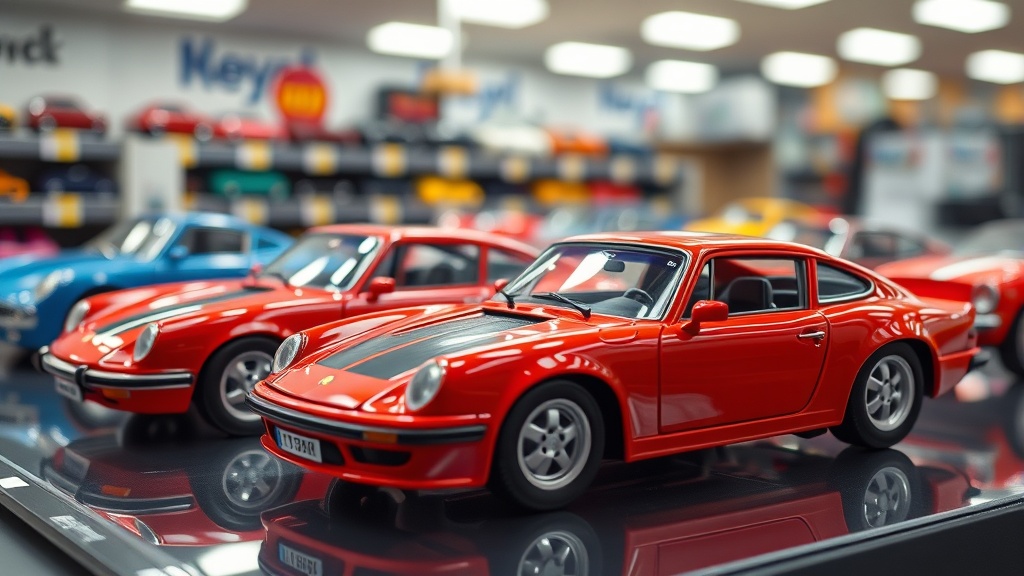
If you’ve ever wondered how to store your model cars safely and beautifully, you’re in the right place. From preventing dust and damage to creating stunning visual displays, proper storage is key to preserving your collection for years to come.
Key Takeaways
- Dust is the Enemy: The most significant threat to your models’ appearance and longevity is dust. Regular cleaning and enclosed storage are essential.
- Material Matters: Consider the materials of both your models (paint, decals, plastic) and your storage solutions (wood, acrylic, glass) to avoid damaging interactions.
- Display vs. Bulk Storage: Different solutions are needed for models you want to showcase versus those you’re storing for the long term or in bulk.
- Temperature and Humidity Control: Extreme fluctuations can cause materials to warp, crack, or degrade. A stable environment is crucial.
- Budget-Friendly Options Exist: You don’t need to break the bank to protect your collection; clever DIY and affordable commercial solutions are readily available.
My journey into diecast collecting began like many of yours, I imagine. A few Hot Wheels cars turned into a shelf full of Matchbox, then a prized 1/18 scale Ferrari, and suddenly, I had a real collection on my hands. And with that collection came the inevitable question: How do I store all these? Early on, I made some mistakes – leaving models exposed to direct sunlight, using cleaners that stripped delicate paint, and simply piling them up in boxes. Each mistake taught me a valuable lesson about preservation.
This guide is built on those lessons, on years of trial and error, and on countless hours spent admiring display cases and organizing my own ever-growing fleet. Whether you’re a seasoned collector with a room full of precious models or a parent looking to protect your child’s favorite Hot Wheels, these strategies will help you keep your collection looking pristine.
The Perils of Improper Model Car Storage
Before we dive into solutions, let’s understand the enemies of your model car collection. I’ve seen firsthand how quickly a beautiful model can degrade if not properly cared for.
Dust: The Universal Nemesis
Dust isn’t just unsightly; it’s abrasive. Over time, dust particles can scratch delicate paint finishes and plastic windows when wiping, and it can settle into every crevice, making models look aged and neglected. For me, the sheer volume of dust in my home office became a constant battle. I’d spend hours cleaning each model, only for dust to resettle within days. This was the primary driver for me investing in enclosed display.
UV Light: The Fading Menace
Direct sunlight is a model car collector’s worst nightmare. Ultraviolet (UV) rays cause paint to fade, decals to yellow and crack, and plastic components to become brittle. I once had a beautiful red 1/18 scale Kyosho Ferrari F40 that I proudly displayed on a windowsill. Within a year, the vibrant red had turned a dull, almost orange-ish hue, and the black plastic trim had become chalky. It was a heart-breaking lesson. Always keep models out of direct sunlight.
Temperature and Humidity Fluctuations: The Silent Destructors
Extreme changes in temperature and humidity can cause materials to expand and contract, leading to warping, cracking, or paint blistering. High humidity can also encourage mold growth, especially on packaging or if models are stored in damp areas. Imagine a delicate plastic windshield bowing or a metal body paint bubbling; I’ve seen it happen to neglected models sold off at flea markets.
Physical Damage: The Accidental Destroyer
Models, especially 1/18 scale diecast, are often heavy and have intricate, fragile parts – mirrors, antennas, spoilers, wipers. A simple bump, fall, or rough handling during cleaning can snap off these components. My kids, bless their hearts, learned early on that Dad’s “special cars” were for looking, not for playing, after a particularly tragic incident involving a misplaced elbow and a delicate Autoart Bugatti Veyron wing mirror.
Pests: The Uninvited Guests
While less common, insects like dust mites or silverfish can damage cardboard packaging or even leave tiny residues on models if stored in undisturbed, damp environments. If you store models in original boxes, make sure the environment is clean and dry.
Displaying Your Collection: Where Beauty Meets Protection
For many collectors, the joy of the hobby lies not just in acquiring models, but in displaying them. The good news is you can achieve both beauty and protection. Before settling on display ideas, you need to decide which models are “display worthy” and which are “storage worthy.” My rule of thumb: If it brings me a moment of joy every time I see it, it’s a display piece. If it’s a duplicate, a project car, or a less-prized piece, it goes into storage.
Acrylic Display Cases: The Clear Choice
Individual acrylic display cases are fantastic for protecting single, prized models, especially in 1/18, 1/24, or 1/12 scales. They keep dust totally at bay and offer UV protection if they’re made with UV-resistant acrylic. I have several Carney Plastics cases and also budget-friendly ones from Amazon that serve this purpose well. They allow 360-degree viewing and stack nicely.
- Pros: Excellent dust protection, good visibility, some offer UV protection, can stack, individual focus on a model.
- Cons: Can be expensive for a large collection, takes up considerable space, requires occasional cleaning of the acrylic itself.
Glass Display Cabinets: The Classic Showcase
For a more substantial display, a glass display cabinet with hinged doors is a classic choice. Brands like IKEA offer popular and affordable options like the Detolf or Fabrikör cabinets. These provide excellent dust protection and a sophisticated look. Adding small LED lights inside can dramatically enhance the presentation of your models. I found the Detolf to be an absolute game-changer for my 1/18 scale collection, allowing me to display about 10-12 cars per shelf, keeping them pristine.
- Pros: Superior dust protection, elegant appearance, can display many models, allows for internal lighting, good security (if doors lock).
- Cons: Heavy, often assembled, can be costly, takes up significant floor space, glass can shatter.
Wall-Mounted Shelves with Doors: Space-Saving Elegance
If floor space is at a premium, wall-mounted display cases are a great option. Look for cabinets with sliding or hinged glass or acrylic doors. These keep dust out efficiently and present your collection beautifully without encroaching on your living area. These are particularly good for smaller scales like Hot Wheels or Matchbox, where you can fit many more models into a compact space. I built several custom units for my Hot Wheels Premium sets, essentially shadow boxes with acrylic sliding fronts.
- Pros: Saves floor space, good dust protection, customizable, appealing visual presentation.
- Cons: Installation requires drilling, capacity might be limited depending on size, can be heavy once loaded.
Open Shelving (with precautions): The Budget Friendly Route
While not ideal for long-term dust protection, open shelves can work if you’re prepared for frequent cleaning. This is often the starting point for many collectors. If you must use open shelving, position them away from high-traffic areas, windows (for UV), and sources of ventilation that blow dust. Regular dusting with a very soft brush or a microfiber cloth is paramount. I started with open shelves and quickly changed my mind. The constant dusting took away from the joy.
- Pros: Very affordable, easy to set up, adaptable to any space.
- Cons: Zero dust protection, models require constant cleaning, susceptible to physical damage, no UV protection.
Storing Your Collection: For the Long Haul or Bulk Buys
Not every model needs to be on display. Some are extras, some are projects, and some are just waiting for their turn in the spotlight. Effective bulk storage is about protection and organization.
Original Packaging: When it Makes Sense
For collectors who value resale or complete originality, storing models in their original boxes or blister packs is desirable. This protects against dust and minor scuffs. However, be mindful of the conditions. Cardboard and plastic can degrade in heat or humidity. If you collect Hot Wheels, those blister packs are great for protection, but they take up a lot of space. For premium 1/18 diecast models, the heavy-duty packaging from brands like Autoart or BBR offers excellent protection, often with foam inserts.
- Pros: Preserves originality/resale value, excellent physical protection for carded items, models are easy to identify.
- Cons: Takes up significant space, cardboard can degrade, plastic blisters can yellow or crack over time.
Plastic Storage Containers: The Workhorse Solution
Clear plastic storage bins with airtight lids are a go-to for bulk storage. They protect against dust, moisture (to an extent), and pests. I prefer clear bins so I can easily see what’s inside without opening every container. For diecast, I’ll often wrap individual models in lint-free microfiber cloths or acid-free tissue paper to prevent paint rub or scratching against each other. For smaller Hot Wheels, Sterilite or IRIS containers with dividers are excellent.
- Pros: Great dust and moisture protection, affordable, stackable, available in various sizes, clear options for visibility.
- Cons: No UV protection (unless opaque), models can still shift and chip if not individually protected, takes up space.
Tackle Boxes or Craft Organizers: Segmented Solutions
For very small models like Hot Wheels, Matchbox, or smaller scale model kit components, tackle boxes or craft organizers with adjustable compartments are brilliant. They keep models separated, preventing dings and scratches. Many Hot Wheels collectors swear by Plano tackle boxes.
- Pros: Excellent organization and separation for small models, portable, good dust protection.
- Cons: Limited to smaller scales, can be bulky when stacked, plastic can sometimes react with certain plastics over long periods (rare, but possible).
Drawer Cabinets: Discrete and Organized
Drawer units, like IKEA Alex drawers or similar craft storage drawers, can be effective for discreet storage. Line the drawers with soft felt or foam to cushion the models. This keeps models out of sight, dust-free, and organized, especially useful for spare parts, accessories, or models awaiting customization.
- Pros: Excellent dust protection, models are out of sight, good organization.
- Cons: Can be expensive, heavy, and models are not visible for quick access/admiration.
Maintenance and Best Practices
No storage solution is maintenance-free. Here’s how to keep your models stored properly and looking their best.
Regular Dusting and Cleaning
Even in enclosed cases, a small amount of dust can eventually find its way in. For display models, a soft, dry microfiber cloth or a dedicated soft detailing brush is essential. For really intricate areas, a can of compressed air (used carefully and at a distance) can help. Never use harsh chemical cleaners on your models. I learned that the hard way with a gorgeous Minichamps McLaren F1 GTR whose delicate tampo prints were partially removed by an ammonia-based glass cleaner. Stick to a soft, damp cloth with plain water for cleaning acrylic or glass cases, and only use approved model car cleaners (usually a very mild soap and water solution) if a model is genuinely dirty beyond dust.
Environmental Control
Aim for a stable environment. A room with controlled temperature and humidity is ideal. Avoid attics, basements, garages, or direct sunlight. If you use climate control for your living space, your models will likely be fine. If you live in an extremely humid climate, a dehumidifier might be a worthwhile investment for your display room.
Avoid Overcrowding
Resist the urge to cram too many models into a small space. Overcrowding can lead to accidental damage when retrieving or placing models, reduces airflow (if in a tight case), and diminishes the visual impact of each piece. Give your models breathing room.
Label Everything
For models stored in opaque containers or boxes, clear labeling is a lifesaver. Note the contents, scale, and any specific details. This prevents you from rummaging through multiple boxes, potentially damaging models in the process.
Comparison of Storage Solutions
| Storage Type | Best For | Pros | Cons | Derek’s Take |
|---|---|---|---|---|
| Individual Acrylic Cases | Prized 1/18, 1/24 models | Excellent dust/UV protection, stackable, clear visibility | Costly for many, takes up space | Essential for my top-tier 1/18 models. Helps create a museum-like display, focusing on each car individually. |
| Glass Display Cabinets | Large collections, all scales | Superb dust protection, elegant, can add lighting, secure | Heavy, large footprint, can be expensive | My go-to for most of my 1/18 and 1/43 display. The IKEA Detolf is hard to beat for value and appearance. |
| Wall-Mounted Shelves/Cases | Space-saving, Hot Wheels/Matchbox | Saves floor space, good dust protection, customizable | Installation effort, capacity limits | Perfect for showcasing my premium Hot Wheels sets and keeping them safe from curious hands and dust. |
| Open Shelving | Budget constraint, temporary display | Affordable, easy setup, flexible layout | No dust/UV protection, high damage risk, models need constant cleaning | A beginner’s starting point, but not sustainable for long-term preservation. I quickly outgrew my desire to dust every car every week. |
| Original Packaging | Resale value, mint-in-box collectors | Preserves condition/value, good physical protection | Takes up huge space, cardboard/plastic degrades, not for display | Good for duplicates or investment pieces I plan to sell. Otherwise, it hides the model’s beauty. |
| Clear Plastic Bins | Bulk storage, unsorted, project cars | Dust/moisture protection, affordable, stackable, visible | No UV protection, models need individual wrapping/protection | Invaluable for models I’m not displaying, or for surplus Hot Wheels. Always use tissue paper or microfiber wraps to prevent rubbing. |
| Tackle Boxes/Craft Organizers | Small scale (Hot Wheels), loose parts | Excellent segmentation, portable, dust protection | Limited to small items, bulky once full | My wife uses these for her crafts, and I immediately realized their potential for organizing my loose Hot Wheels and accessories. Keeps them from rattling around. |
| Drawer Cabinets | Discreet storage, tools/parts, custom projects | Excellent dust protection, organized, out of sight | Not for display, can be heavy | I use these for model kit supplies, spare parts, and “project cars” that are awaiting their turn. Keeps them perfectly safe and dust-free. |
Ultimately, the best storage solution for you will depend on the size of your collection, your budget, the available space, and how important displaying your models is versus simply protecting them. My advice? Don’t be afraid to mix and match solutions. I certainly do!
FAQ
### How do I clean dust off my diecast models without damaging them?
The best method I’ve found is to use a very soft, natural-bristle brush (like a makeup brush or a dedicated detailing brush for models) to gently sweep away dust. For stubborn dust in crevices, a can of compressed air can work, but use it sparingly and from a safe distance to avoid damaging small parts. Finish with a lightly damp microfiber cloth for larger, smooth surfaces if dust is caked on, but avoid getting water into intricate areas or electronics if your model has them.
### Can I use furniture polish on my wooden display cases?
Yes, for wooden display cases, traditional furniture polish can be used to keep the wood looking good. Just make sure to apply it carefully, away from any glass or acrylic panels, and prevent overspray onto your models. For cleaning glass or acrylic, use a specialized glass cleaner (ammonia-free for acrylic) or simply a damp cloth with water.
### Is it safe to store model cars in a garage or attic?
Generally, no. Garages and attics often experience significant temperature and humidity fluctuations, which are detrimental to models. High heat can warp plastic, fade paint, and degrade rubber tires. Extreme cold can make plastics brittle. Humidity can cause metal parts to rust and cardboard packaging to mold. I’ve learned that a consistent, climate-controlled environment, like a living area, is always best. If you absolutely must use a garage, consider investing in dedicated climate-controlled storage units or at least airtight, robust containers that offer some insulation.
### How can I protect my models from UV damage if I have a sunny room?
The best defense is to avoid placing models in direct sunlight altogether. If that’s unavoidable, consider solutions like UV-filtering window films or curtains/blinds that you can close during peak sun hours. Some acrylic display cases are also made with UV-protective acrylic, which can offer an additional layer of defense for individual prized models. Regular glass doesn’t block most damaging UV rays, so don’t rely on a simple window or cabinet door for protection.