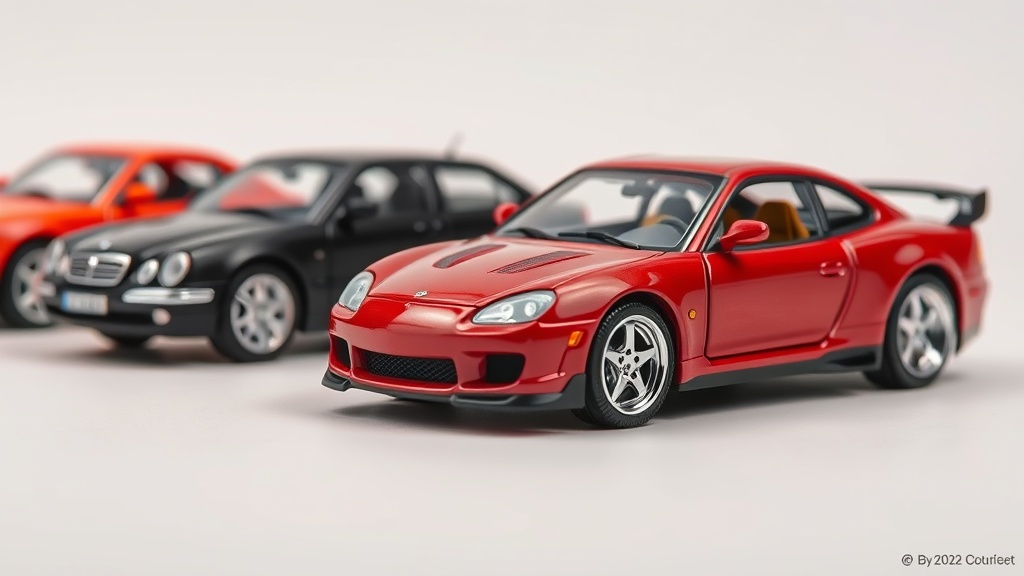
For diecast collectors, figuring out the best model car brands can feel like navigating a pit lane full of options. Whether you’re chasing the perfect scale replica or just starting a collection, knowing which brands deliver quality and value is key.
Key Takeaways
- Hot Wheels and Matchbox are undisputed champions for budget-friendly fun, perfect for kids and casual collectors.
- For detailed 1/64 scale, Mini GT, Tarmac Works, and Auto World offer a significant step up in realism.
- In 1/43 and larger scales, AUTOart consistently delivers premium detail and construction, often with fully opening parts.
- Maisto and Bburago provide excellent value in 1/18 and 1/24 scales, great for display without breaking the bank.
- Consider your budget, preferred scale, and desired level of detail when choosing the right brand for your collection.
From Budget Blasters to Collector’s Dreams: My Journey Through Diecast Brands
Over the decades I’ve been collecting, I’ve seen brands come and go, watched quality fluctuate, and learned the hard way about what truly makes a great model car. From the countless Hot Wheels I pushed across my childhood carpet to the meticulously detailed 1/18 replicas now gracing my display cases, my journey started simple. Like many of you, I began with those ubiquitous blister packs, dreaming of a full-scale Ferrari. As my passion grew, so did my standards, and I started exploring the vast world of diecast, from affordable playthings to investment-grade display pieces.
This guide isn’t just a list; it’s a distillation of years of hands-on experience, countless hours comparing models, and even a few regrettable purchases. I’ve stripped paint, broken mirrors, and even glued a few tires back on. All that trial and error has given me a pretty good radar for spotting quality and value. When I say a brand is good for beginners, or that another offers museum-quality detail, it comes from a place of genuine understanding and, frankly, a few lessons learned the hard way so you don’t have to.
Let’s dive into the brands that have earned their place in my collection and, I believe, deserve a spot in yours.
The Everyday Drivers: Brands for Play & Entry-Level Collecting
These are the brands that get many of us hooked. They’re affordable, widely available, and offer a fantastic entry point into the hobby.
Hot Wheels & Matchbox: The Legends Live On
You can’t talk about model cars without starting here. Hot Wheels and Matchbox are the Coca-Cola and Pepsi of the diecast world, fueling childhood imaginations for generations.
Hot Wheels, owned by Mattel, is renowned for its wild designs, vibrant colors, and performance-oriented fantasy cars mixed in with licensed vehicles. Their mainline series, priced around a dollar, is a treasure hunt for many, with collectors constantly searching for rare “Treasure Hunts” and “Super Treasure Hunts.” I remember the thrill of finding a new casting in the pegs at the local grocery store. Beyond the mainline, their premium lines like Car Culture, Retro Entertainment, and Replica Entertainment offer more detailed castings, rubber tires, and intricate tampo printing, elevating them from simple toys to respectable collector pieces perfect for display. They often tackle specific themes or media franchises, which is a big draw.
Matchbox, also under Mattel, has historically focused more on realistic, everyday vehicles and utility machines. While Hot Wheels was about speed and flair, Matchbox was about recreating the world around us in miniature. This focus on realism and practical vehicles continues today, though they’ve certainly broadened their appeal. Their 1-75 mainline series is similar in price to Hot Wheels, excellent for kids and those who appreciate faithfully reproduced civilian cars, trucks, and emergency vehicles. Their “Collector” series, much like Hot Wheels’ premium lines, offers a step up in detail with rubber tires and more precise paintwork. When I was a kid, a Matchbox police car or fire engine felt like the real thing, just smaller.
Both brands are fantastic for:
- Kids: Durable, affordable, and encourages imaginative play.
- Beginner Collectors: Low cost of entry, massive variety, and plenty of “chase” items to keep things exciting.
- Customizers: The simplicity of many castings makes them perfect for repaints and modifications.
Maisto & Bburago: Large Scale Value
When you’re ready for something a bit bigger without spending a fortune, Maisto and Bburago enter the scene. Interestingly, both are now part of the same parent company, May Cheong Group, and often share castings or production facilities. They specialize in 1/18, 1/24, and 1/64 scale models, often found in toy stores, department stores, and even pharmacies.
Maisto is widely recognized for its excellent value in 1/18 scale. Their models typically feature opening doors, hoods, and trunks, with a decent level of engine and interior detail for their price point. This allows you to explore the car’s features in a way you can’t with smaller, sealed models. While they won’t have the hyper-detailed accuracy of an AUTOart, they’re perfect for filling a display shelf with a variety of iconic vehicles. I have several Maisto 1/18s, including a classic Corvette and a couple of muscle cars, and they look great from a foot or two away.
Bburago often holds exclusive licenses for brands like Ferrari, making them a go-to for prancing horse enthusiasts on a budget. Similar to Maisto, they offer good detail and opening features for their price, especially in 1/18 and 1/24 scales. Their 1/43 and larger scale models are solid choices for collectors seeking prominent display pieces without venturing into the highest price tiers. I specifically remember their Ferrari F40 and Testarossa models being popular and relatively affordable back in the day – great for young collectors like me who dreamed of owning a supercar.
Both brands are excellent for:
- Value-Oriented Collectors: Get larger scales and opening parts without a premium price tag.
- Mid-Level Displays: Look impressive on a shelf, especially for the casual observer.
- Gift Givers: High perceived value without a high cost, especially for car enthusiasts.
The Detail Drivers: Stepping Up to Premium Miniatures
Once you start looking for more refined details, accurate proportions, and higher-quality materials in smaller scales (primarily 1/64), these brands shine.
Mini GT: Redefining 1/64 Scale
Mini GT has, in my opinion, almost single-handedly redefined what’s possible in 1/64 scale. Born from the same parent company as Tarmac Works (which we’ll discuss next), Mini GT focuses on meticulously detailed, accurately proportioned models with rubber tires and incredibly crisp tampo graphics. Their models are sealed (no opening parts), which allows for exceptionally precise panel gaps and body lines.
Their range includes a fantastic mix of JDM (Japanese Domestic Market) legends, European supercars, American muscle, and modern sports cars. The paint finishes are smooth and deep, and the level of intricate detail on headlights, taillights, grilles, and even small badges is astounding for the scale. I often find myself picking up a Mini GT model and just marveling at the craftsmanship. They often release special editions and collaborations, making them highly sought after. They’ve quickly become a favorite in my 1/64 collection.
Mini GT is perfect for:
- Serious 1/64 Collectors: unparalleled detail and accuracy in this scale.
- Showcase Displays: These models demand attention, even in their small size.
- Fans of Specific Car Cultures: Excellent representation of JDM, European, and American vehicles.
Tarmac Works: Racing & JDM Specialist
Closely related to Mini GT, Tarmac Works carved out its niche by initially focusing heavily on race cars, particularly those from Asian racing series, and highly desirable JDM street cars. They share a similar philosophy of high detail, accurate molds, and quality finishes in 1/64 scale (and occasionally 1/43 and 1/18).
What separates Tarmac Works is their deep dive into actual race liveries and often more exotic or modified street cars. If you’re a fan of GT racing, Japanese tuners, or obscure yet cool JDM models, Tarmac Works likely has something for you. They produce fantastic dioramas that capture a moment in time. Like Mini GT, their models are sealed and feature rubber tires, often with intricate wheel designs. Their packaging is also quite collector-friendly. I appreciate their dedication to capturing specific race versions, complete with sponsor decals and authentic racing aesthetics.
Tarmac Works excels for:
- Motorsport Enthusiasts: Extensive range of race car liveries and models.
- JDM Fanatics: Deep catalog of popular and niche Japanese street cars.
- Diorama Builders: Models are often designed with display and diorama integration in mind.
Auto World: American Muscle & Modern Classics
Auto World occupies a fascinating space, offering a wide range of scales from 1/64 to 1/18, but it really shines in 1/64 and 1/18 with its focus on American vehicles. They’ve built a strong reputation for accurately reproducing classic muscle cars, modern American performance cars, and some vintage domestic vehicles.
In 1/64, Auto World offers excellent detail, often with rubber tires, and a good variety of castings. Their “Ultra Red” and “Ultra Raw” chase pieces are highly sought after, similar to Hot Wheels’ Super Treasure Hunts but with a slightly more collector-focused aesthetic. In 1/18, they offer opening parts and a good level of engine and interior detail, rivaling and often surpassing Maisto for American iron. I have several of their muscle cars, and they definitely capture the essence of these powerful machines. Their muscle cars from the 60s and 70s are particularly impressive.
Auto World is ideal for:
- American Car Collectors: Extensive lineup of classic and modern American vehicles.
- Mid-Range 1/18 Collectors: Good detail and opening features without reaching premium price points.
- 1/64 Enthusiasts: Solid alternative or complement to brands like Hot Wheels premium lines.
The Apex Predators: True Collector-Grade & Investment Pieces
When cost is less of a concern than absolute fidelity to the real car, these brands stand at the pinnacle of diecast manufacturing.
AUTOart: Consistency and Quality at the Top
For many years, AUTOart has been considered one of the gold standards in collectible diecast models, particularly in 1/18 scale. They are renowned for their incredible detail, flawless paint finishes, excellent proportions, and often an extensive array of opening parts – doors, hood, trunk, and sometimes even fuel filler caps or movable spoilers. Their models use high-quality materials and boast intricate engine bays, meticulously crafted interiors, and realistic undercarriages.
In recent years, AUTOart has made a significant shift, moving away from all-diecast construction for many of their new releases. Instead, they primarily use a composite material for their bodies, often referred to as “Signature Composite.” While initially met with some resistance from traditional diecast purists (myself included, a bit), this material allows for sharper lines, lighter models, and incredibly precise details that are harder to achieve with traditional die-casting. Despite the material change, their quality control remains exceptionally high, and they continue to produce some of the most stunning and accurate replicas on the market. Their attention to detail, from tiny photo-etched parts to functional suspensions, is truly remarkable.
AUTOart is the choice for:
- Discerning Collectors: Those who demand the highest level of detail and accuracy.
- Investment-Minded Buyers: While not guaranteed, high-quality, limited-edition AUTOart models tend to hold or increase their value over time.
- Showpiece Displays: These models are designed to be the centerpiece of a collection.
OttO Mobile & GT Spirit: Resin Perfection
Stepping into a slightly different construction method, OttO Mobile and GT Spirit specialize in resin models. Unlike diecast, resin models are typically sealed (no opening parts) but allow for incredibly sharp body lines, incredibly low production runs, and often more aggressive or unique tunings and racing aesthetics that traditional diecast brands might shy away from. GT Spirit is often considered the higher-end counterpart to OttO Mobile, sometimes featuring more intricate paint schemes or slightly elevated detailing.
The advantage of resin is the ability to capture very fine details and complex body shapes with precision. The paint finish on these models is usually immaculate. However, due to the sealed nature and the material, they require a bit more delicate handling. These brands are particularly popular for reproducing rare or highly modified cars, as well as a fantastic array of classic German and French vehicles that are often overlooked by other manufacturers. I have a few OttO Mobile models of cars I love but can’t find in diecast, and they often become instant favorites because of their uniqueness.
These brands are ideal for:
- Niche Collectors: Seeking rare, modified, or often underproduced real-world vehicles.
- Detail Enthusiasts: Appreciate the sharp lines and perfect proportions afforded by resin.
- Static Display: Best for permanent display, as the sealed nature means less interactive exploration.
Looksmart & BBR: High-End Resin & Exotic Scale
At the very top tier, particularly for fans of exotic supercars (especially Ferraris and Lamborghinis) and limited-edition race cars, you’ll find brands like Looksmart and BBR. These are almost exclusively resin models, often with production runs of just dozens or a few hundred pieces. They are meticulously hand-assembled, feature exquisite paint finishes, incredibly intricate details (down to tiny carbon fiber weave patterns), and are typically presented on high-quality display bases with acrylic cases.
These models are the closest thing you can get to owning a miniature version of the real car, often at prices that reflect the artisanal craftsmanship. They are not merely models but miniature works of art, representing the pinnacle of collection. I don’t own many of these myself – they are definitely beyond my everyday budget – but I’ve admired them at shows, and the level of sheer dedication to accuracy is breathtaking.
Looksmart and BBR are for:
- Ultimate Collectors: Those who desire the absolute best in accuracy, rarity, and craftsmanship.
- Luxury Car Enthusiasts: Specializing in supercars, hypercars, and exclusive prototypes.
- Investment Collectors: High rarity and quality often lead to significant appreciation in value.
Important Considerations When Choosing a Brand
| Feature/Brand Type | Hot Wheels/Matchbox | Maisto/Bburago | Mini GT/Tarmac/Auto World | AUTOart | OttO/GT Spirit | Looksmart/BBR |
|---|---|---|---|---|---|---|
| Price Range | $1 - $10 | $15 - $60 | $15 - $40 | $150 - $400+ | $100 - $250 | $300 - $800+ |
| Primary Scale(s) | 1/64 | 1/18, 1/24, 1/64 | 1/64 (some 1/43, 1/18) | 1/18, 1/12 | 1/18, 1/12 | 1/18, 1/43, 1/12 |
| Material | Diecast, Plastic | Diecast, Plastic | Diecast | Diecast (older), Composite | Resin | Resin |
| Opening Parts | No (some have) | Yes (hood, doors, trunk) | No | Yes (most) | No | No |
| Detail Level | Basic, good for price | Good, especially for scale | Excellent for scale | Exceptional | Excellent | Meticulous |
| Target Audience | Kids, casual collectors, beginners | Budget-conscious, display | Serious small-scale collectors | High-end collectors, enthusiasts | Niche collectors, tuners | Elite collectors, enthusiasts of exotics |
| Durability | High | Good | Good | Moderate (composite can be fragile) | Moderate (resin is brittle) | Moderate |
| Availability | Widespread | Widespread | Specialty retailers, online | Specialty retailers, online | Specialty retailers, online | Limited, high-end online |
Scale Determines Detail and Price
The scale of a model car is perhaps the most fundamental decision you’ll make. It directly impacts detail, price, and how much space it will take up.
- 1/64 Scale (e.g., Hot Wheels, Matchbox, Mini GT): Small, collectible, great for dioramas or displaying many cars in a small space. Less detail overall, but premium brands maximize it.
- 1/43 Scale (e.g., some Bburago, Spark, Mini GT): A good middle ground for detail and size. Often sealed resin models.
- 1/24 Scale (e.g., Maisto, Bburago): Often kits, but also pre-built. A comfortable size for desk display, showing good interior detail.
- 1/18 Scale (e.g., AUTOart, Maisto, OttO Mobile): The most popular collector scale, offering extensive detail, opening parts (on diecast), and a substantial presence. This is where most of my collection lives.
- 1/12 Scale and larger: Niche, expensive, massive, and highly detailed. True showpieces.
Diecast vs. Resin vs. Composite
- Diecast (metal): The traditional material, known for weight, durability, and a satisfying feel. Allows for opening parts. Can limit intricate details in some smaller components.
- Resin: Lighter, allows for incredibly sharp lines, intricate details, and low production runs. Typically sealed (no opening parts) and more fragile than diecast.
- Composite: AUTOart’s preferred material. Lighter than diecast, allows for very precise body lines and panel gaps, and intricate details. Can feel less “solid” to some traditional collectors but offers superior accuracy in many cases.
Each material has its pros and cons, often dictating what kind of detail or feature set is possible.
Opening Parts vs. Sealed Body
- Opening parts (doors, hood, trunk): Primarily found on diecast models in 1/18 scale and larger. Allows for exploration of engine bays, interiors, and trunks. Adds interactivity.
- Sealed body: Common in 1/64, 1/43, and most resin/composite models. Allows for perfect body lines and panel gaps, with no compromises for hinge mechanisms. Details are still present, but not accessible.
Your preference here depends on whether you like to “play” with your models or simply display them as static art.
Manufacturer Licenses
Many brands hold exclusive licenses for specific car manufacturers (e.g., Bburago and Ferrari, Amalgam and Ferrari F1 cars). If you’re a fan of a particular marque, checking license agreements can help direct your search. This is how I ended up with so many Porsches in my collection – finding the brand that consistently makes excellent 911s is key!
Final Thoughts: The Best Brand is Yours
Ultimately, the “best” model car brand isn’t a universal truth; it’s deeply personal. It depends on your budget, your preferred scale, the level of detail you crave, and the specific cars you want to collect. My advice is to start with what excites you, whether it’s a dollar Hot Wheels or a meticulously crafted AUTOart. Over time, your tastes will evolve, and you’ll find the brands that resonate most with your collecting style.
Don’t be afraid to mix and match. My shelves are a testament to this, with Mini GT 1/64s alongside Maisto 1/18s and the occasional AUTOart centerpiece. There’s a brand out there for every collector, and the joy is in the discovery.
FAQ
### What are the best model car brands for beginners?
For beginners, Hot Wheels and Matchbox are ideal because they are inexpensive, widely available, and offer a vast variety of models. If you’re looking for larger scales (1/18 or 1/24) without breaking the bank, Maisto and Bburago provide excellent value with opening parts and decent detail, perfect for starting a display collection.
### Which brand offers the most detailed 1/18 scale model cars?
For the most detailed 1/18 scale model cars, AUTOart is consistently considered a top-tier brand. They offer exceptional accuracy, intricate engine and interior details, and often working features like suspension and opening parts. While they have moved to composite materials for many new releases, their commitment to detail remains paramount. For specific niche or exotic cars, high-end resin brands like Looksmart and BBR offer unparalleled fidelity.
### What’s the difference between diecast and resin model cars?
Diecast model cars are made primarily from zinc alloy (metal), giving them weight and durability. They often feature opening parts like doors, hoods, and trunks. Resin model cars, on the other hand, are made from a urethane resin and are typically sealed, meaning no opening parts. Resin allows for sharper body lines and finer details that can be challenging to achieve with diecast, but they are generally more fragile and lighter.
### Are Hot Wheels Collector Editions worth collecting?
Yes, Hot Wheels Collector Editions and premium lines (like Car Culture, Retro Entertainment, and Red Line Club) are definitely worth collecting for many enthusiasts. These models feature more detailed castings, rubber tires, superior paint, and often iconic liveries or specific themes that appeal to adult collectors. They also have “chase” pieces like “Super Treasure Hunts” which can hold significant value.
### Why are some model car brands so expensive?
The high price of some model car brands stems from several factors: the level of meticulous detail and accuracy, the quality of materials used (e.g., photo-etched parts, real leather interiors in some premium models), the limited production runs, the licensing fees for specific car manufacturers, and the extensive research and development involved in making a highly accurate replica. Brands like AUTOart, Looksmart, and BBR are essentially miniature works of art, reflecting artisanal craftsmanship.
### Which brand is best for Ferrari model cars?
While many brands produce Ferrari models, Bburago holds exclusive licensing for many Ferrari road cars, offering excellent value across 1/18, 1/24, and 1/43 scales. For ultimate detail and exclusivity, especially for classic or specific racing Ferraris, Looksmart and BBR produce incredibly high-end, limited-edition resin models that set the standard for accuracy. For 1/64, Hot Wheels also has a license for some Ferrari models, offering more budget-friendly options.