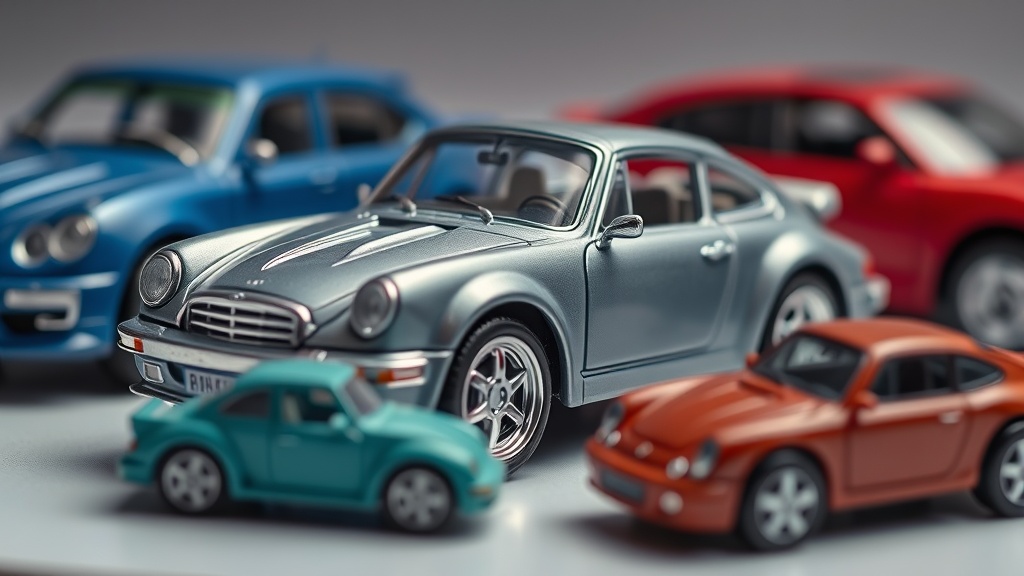
A diecast car isn’t just a toy; it’s a miniature marvel, a collectible, and for many, a nostalgic journey into automotive history. As a diecast enthusiast for decades, I’ve seen these scaled-down vehicles evolve from simple playthings to incredibly detailed, display-worthy pieces of art.
Key Takeaways
- Diecasting is a manufacturing process where molten metal (often zinc alloy, or “Zamak”) is injected into a mold under high pressure to create precise, durable parts.
- Diecast cars encompass a wide range from affordable Hot Wheels and Matchbox to high-end, detailed collector’s models from brands like AUTOart and BBR.
- Scale is crucial for collectors, denoting the size relative to the real vehicle (e.g., 1:18, 1:64).
- Collectibility is driven by factors like rarity, detail, licensing, and condition (especially for vintage pieces).
- Care and display are essential to preserve your models, protecting them from dust, UV light, and accidental damage.
What Exactly is “Diecast”?
At its heart, “diecast” refers to the manufacturing process. It’s a method of injecting molten metal – typically a zinc alloy (often called Zamak) – into a steel mold, or “die,” under high pressure. This process creates parts with excellent dimensional accuracy, smooth surfaces, and the ability to reproduce intricate details consistently. While diecasting is used for countless everyday items, from plumbing fixtures to engine parts, it’s most famously associated with miniature vehicles.
When we talk about a “diecast car,” we’re usually referring to a model car (or truck, airplane, etc.) whose main body and chassis components are made using this diecasting method. Other materials like plastic, rubber, and even photo-etched metal are often incorporated for details like windows, tires, interiors, and grilles, but the core structure is diecast metal.
The beauty of diecasting for toys and models is its durability and heft. I remember as a kid, the weight of a Hot Wheels car in my hand just felt right. It conveyed a sense of quality and robustness that plastic toys often lacked. This physical sensation still holds true for me today, whether it’s a budget Maisto or a premium BBR model.
A Brief History of Diecast Models
The origins of diecast goes back further than you might think. During the early 20th century, companies like Bing and Hornby (Meccano) in Europe and Tootsietoy in the US started producing small metal toys using sand casting or other early metal-forming techniques. These were robust and popular, but the real revolution came with the refinement of the diecasting process.
Post-WWII saw an explosion in diecast popularity. Dinky Toys in the UK, established in the 1930s, became a household name, known for its range of accurate vehicles. Then came Matchbox, which famously fit into a matchbox (hence the name!), offering affordability and a vast selection. I remember countless hours playing with my dad’s old Matchbox cars, their chipped paint telling tales of epic driveway races.
The late 1960s brought the American challenger: Hot Wheels. When Hot Wheels burst onto the scene in 1968, they didn’t just offer cars; they offered a whole system of orange tracks and stunt sets. Their “redline” wheels and custom-designed “fantasy” cars captivated a new generation, including a younger version of myself. This era marked a shift towards more imaginative designs alongside realistic reproductions.
Over the decades, the market diversified. More specialized brands emerged, focusing on higher detail, larger scales, and specific marques. Companies like Corgi became known for their feature-rich models, often including opening parts, working suspensions, and even James Bond gadgets. My first truly “collector’s” piece, a Corgi Batmobile, ignited my passion for larger, more detailed diecast models. Today, the spectrum ranges from these pocket-money toys to museum-quality replicas.
Scales and Collectibility: What Does 1:18 or 1:64 Mean?
Understanding scale is fundamental to collecting diecast cars. It tells you the ratio of the model’s size to the size of the actual vehicle. For example, a 1:18 scale car is one-eighteenth the size of the real car it represents. This means that if the real car is 18 feet long, the model will be 1 foot long.
Here’s a quick rundown of common scales and what they typically mean for collectors:
- 1:64 Scale: This is the most popular size for Hot Wheels and Matchbox. These are small, palm-sized cars, typically 2.5 to 3 inches long. They are highly collectible due to their low price point, vast variety, and the “thrill of the hunt” for rare variations. Many premium brands, like Mini GT and Tarmac Works, also produce highly detailed 1:64 models, sometimes with rubber tires and intricate tampos (decals). I’ve got bins of these at my house, and I still can’t pass up a cool mainline at the grocery store.
- 1:43 Scale: A good mid-range option, offering more detail than 1:64 but still relatively compact. These models are often 4-5 inches long and are popular among collectors who want more realism without the space commitment of larger scales. Brands like Spark and Minichamps excel in this scale, often producing sealed models (no opening parts) with incredible exterior detail.
- 1:24 Scale: Once very popular, especially for promotional models and kits, these are about 7-8 inches long. Many affordable diecast models from brands like Maisto and Bburago are found in this scale, offering a good balance of size, detail, and price for casual collectors. My oldest Ferrari models are mostly 1:24, often picked up from department stores in my youth.
- 1:18 Scale: This is often considered the darling of serious diecast collectors. At 9-11 inches long, these models offer a significant amount of detail, often with opening doors, hoods, and trunks, allowing you to admire engine bays and interiors. This is where brands like AUTOart, NOREV, Kyosho, and BBR truly shine, reproducing intricate details and complex paint finishes. My display cabinets are dominated by 1:18 scale models; they demand attention.
- 1:12 Scale: Large, impressive models, sometimes 14-16 inches long. These are often high-end pieces, sometimes commanding prices into the hundreds or even thousands of dollars. They offer an unparalleled level of detail and presence. AUTOart and Minichamps produce some truly breathtaking models in this scale, though they require considerable display space.
- 1:8 Scale: These are enormous, often 20-25 inches long, and are typically custom-built or extremely limited production models. They are akin to museum pieces and come with very high price tags.
What makes a diecast car collectible? It’s a mix of factors:
- Rarity: Limited production runs, exclusive editions, or models that were only available for a short period.
- Condition: For vintage pieces especially, excellent condition (including original packaging) dramatically increases value. Think “mint in box.”
- Detail and Accuracy: High-end models that faithfully reproduce every nuance of the real car are highly sought after.
- Brand and Licensing: Officially licensed models from prestigious marques (like Ferrari, Porsche, Lamborghini) or reputable diecast manufacturers often hold their value better.
- Nostalgia and Pop Culture: Cars from movies (e.g., James Bond Aston Martin DB5, Back to the Future DeLorean) or those tied to personal memories resonate strongly.
Construction and Materials: More Than Just Zamak
While the “diecast” part refers to the main body, a modern diecast car is a symphony of different materials and manufacturing techniques.
- Body (Zamak alloy): As discussed, this is the core. Zinc alloy is strong, relatively dense (giving that satisfying weight), and takes paint very well. It’s also corrosion-resistant, which is great for longevity.
- Chassis: Can also be diecast metal, but often a sturdy plastic, especially in smaller or more budget-friendly models. This keeps costs and weight down.
- Interior (Plastic): Seat, dashboards, steering wheels, and door panels are almost universally made from injection-molded plastic. This allows for fine detail, painting of different textures, and the ability to create complex shapes. High-end models will have flocked (velvet-like) carpets, fabric seatbelts, and highly detailed gauges.
- Windows (Clear Plastic/Acrylic): Transparent plastic, often polystyrene or acrylic, is used for windshields and windows. Quality varies greatly; some models feature flush-mounted, thin “glass” while others have thicker, more recessed pieces.
- Tires (Rubber or Plastic): Premium models feature real rubber tires, often with authentic tread patterns and sidewall markings from tire manufacturers (Pirelli, Michelin). Cheaper models use hard plastic tires, which are less realistic but durable for play.
- Detail Parts (Photo-etch, Chrome Plastic, Decals): Grilles, badges, brake discs, headlamp lenses, and intricate vents can be made from a variety of materials. Photo-etched metal (thin sheets chemically etched to create grill patterns, for instance) adds incredible realism. Chrome-plated plastic is common for brightwork. Decals (tampos) are used for racing liveries, emblems, and interior details.
- Paint and Finish: This is where a lot of the magic happens. Multi-stage painting processes, clear coats, and meticulous polishing bring out the luster of the real car. Some manufacturers even strive to replicate specific paint types like metallic flakes or pearlescent finishes. I’ve had to learn the hard way that not all cleaners are suitable for these delicate finishes; aggressive chemicals can ruin a clear coat, leaving a dull, sticky surface. Never use anything stronger than a gentle plastic-safe cleaner or plain distilled water.
Collecting vs. Playing: The Diecast Spectrum
The world of diecast cars spans a wide range of uses and motivations:
- Toys for Play: This is where it all began for many of us. Hot Wheels and Matchbox are designed to be durable, rolled around, crashed, and raced on tracks. While collectors might seek out variations and rare issues, the primary intent is often play. These are fantastic for sparking imagination and developing fine motor skills in children.
- Entry-Level Collecting: Brands like Maisto and Bburago offer excellent value for money. They provide good detail, decent quality, and often opening features at accessible price points. These are great for starting a collection, for gifts, or for those who want a varied display without spending a fortune. I often recommend these for first-time collectors, especially if they’re unsure which specific models or scales they want to focus on.
- Mid-Range Collector Models: Brands such as NOREV, Solido, and some Kyosho models fall into this category. They offer enhanced detail over budget brands, often with intricate interiors, better paint, and more accurate proportions, but without the extreme price tag of premium models. They often make great display pieces.
- High-End Collector Models: This is where brands like AUTOart, Minichamps, Spark, and BBR reside. These models are characterized by an obsessive attention to detail, incredibly accurate scaling, flawless paintwork, and often features like working suspensions, finely replicated engine bays, and complex interiors. Materials like carbon fiber, real leather, and photo-etched metal are common. These are typically sealed in display cases or meant for adult collectors and are not intended for play. This is where my personal collection leans heavily, appreciating the craftsmanship and engineering behind each piece.
- One-of-a-Kind/Custom Models: Some enthusiasts take diecast collecting to another level by customizing models, adding their own details, repainting, or even building entirely new models from scratch. There are also artisan builders who create incredibly detailed, limited-run models, often at very high prices.
Display and Care for Your Diecast Collection
Once you start collecting, protecting and displaying your pieces becomes a significant part of the hobby. I’ve learned a lot over the years, sometimes the hard way!
Display Options:
- Blister Packs/Original Boxes: For smaller scales like 1:64, many collectors keep models in their original packaging, especially if they are rare or unique variations. This preserves their “mint” condition.
- Acrylic Display Cases: These are essential for protecting larger, more valuable models (1:18, 1:43) from dust, fingerprints, and accidental knocks. Many acrylic cases offer UV protection, which is crucial for preventing paint fade over time. I’ve built entire display walls with these and they make a huge difference.
- Display Cabinets: Glass display cabinets with shelves are excellent for displaying multiple models. Look for cabinets with good sealing to minimize dust intrusion. IKEA’s Detolf cabinets are a popular, affordable option among collectors.
- Wall-Mounted Displays: For 1:64 or smaller scales, wall-mounted display cases (often with clear fronts) can be a great space-saver and a way to show off a large collection.
- Dioramas: For the truly creative, building a diorama (a miniature scene) around your models can bring them to life, creating a narrative and context for your collection.
Care and Maintenance:
- Dusting: Dust is the enemy! It can accumulate in crevices and can even scratch delicate paintwork if wiped improperly. Use a soft brush (like a makeup brush or a dedicated model dusting brush), a soft microfiber cloth, or compressed air for dusting. Never use furniture polish or abrasive cloths.
- Cleaning: For general cleaning, especially on windows, a very lightly dampened microfiber cloth with distilled water or a specialized plastic cleaner (like Novus Plastic Polish for light scratches) is best. I made the mistake once of using an all-purpose household cleaner on a model, and it left a hazy, sticky residue that ruined the clear coat. Stick to gentle, non-abrasive cleaners.
- Handling: Always handle models by their main body or chassis, avoiding delicate parts like mirrors, antennas, or spoilers. The oils from your skin can also leave marks or corrode certain finishes over time, so some serious collectors even wear cotton gloves.
- Sunlight and UV Exposure: Direct sunlight is a huge no-no. UV rays can fade paint colors, warp plastic parts, and yellow clear plastics over time. Position your displays away from windows or use UV-protective cases/films.
- Temperature and Humidity: Extreme fluctuations in temperature or high humidity can also take a toll, especially on older models or those with rubber parts. Maintaining a stable room temperature and moderate humidity is ideal.
I’ve put together a quick comparison table below to illustrate the differences across various diecast brands. This isn’t exhaustive, but it covers some of the major players we’ve discussed:
Diecast Brand Comparison Checklist
| Feature/Brand | Hot Wheels & Matchbox (Mainline) | Maisto & Bburago (Entry) | NOREV & Solido (Mid-Range) | AUTOart & Kyosho (High-End) | BBR & Amalgam (Ultra-High-End) |
|---|---|---|---|---|---|
| Typical Scale | 1:64 | 1:24, 1:18 | 1:18, 1:43, 1:64 | 1:18, 1:12, 1:43 | 1:18, 1:12, 1:8 |
| Price Point | $1-5 | $20-60 | $70-150 | $150-500+ | $300-5000+ |
| Primary Material | Diecast metal | Diecast metal, plastic | Diecast metal, plastic | Diecast metal, composite | Resin, diecast, photo-etch |
| Detail Level | Basic, robust for play | Good, some interior detail | Very good, accurate shapes | Excellent, intricate engine/interior | Fanatical, museum-quality |
| Opening Features | No (sometimes simple) | Hood, doors (often) | Hood, doors, trunk (often) | All possible (often) | Often sealed (resin models), some working |
| Tires | Hard plastic | Rubber (often) | Rubber (usually) | Rubber with tread/logos | Realistic rubber, detailed brakes |
| Paint Quality | Good | Good, simple clear coat | Very good, deep finish | Superb, multi-stage, flawless | Concours-quality, deep gloss |
| Target Audience | Kids, casual collectors | Casual collectors, gifts | Enthusiasts, discerning collectors | Serious collectors, investors | Discerning collectors, enthusiasts, investors |
| Collectibility | Quantity, variations, rare finds | Decorative, personal favs | Detail-oriented collecting | Investment, display pieces | Investment, art pieces |
FAQ
### What is the difference between a diecast car and a model car?
“Diecast car” specifies the method of construction (molten metal injected into a mold), particularly for the main body. “Model car” is a broader term that refers to any miniature replica of a car, regardless of how it’s made. So, all diecast cars are model cars, but not all model cars are diecast (e.g., plastic kits, resin models, or wood models are also model cars).
### Are all diecast cars expensive?
Absolutely not! The price range for diecast cars is vast. You can find Hot Wheels and Matchbox cars for a few dollars, making them very accessible. As you move to larger scales and higher levels of detail and craftsmanship (like AUTOart or BBR), prices can climb into the hundreds or even thousands of dollars. There’s a diecast car for nearly every budget.
### How should I clean my diecast cars without damaging them?
For general dusting, use a very soft brush (like a makeup brush) or a blast of compressed air from a can. For fingerprints or smudges on the body, a soft microfiber cloth lightly dampened with distilled water is usually sufficient. For clear plastic windows, use a dedicated plastic cleaner, being careful not to get it on painted surfaces. Never use abrasive cleaners, strong chemical solutions, or paper towels, as these can scratch paint, leave residue, or damage finishes.
### Do diecast cars increase in value?
Some diecast cars do increase in value, especially rare variations, limited editions, or vintage pieces kept in pristine condition (ideally in their original packaging). Brands with strong collector followings, officially licensed models, and those depicting iconic vehicles (like a Ferrari or a James Bond Aston Martin) often hold or increase in value better than generic models. However, it’s generally best to collect for enjoyment rather than solely for investment, as specific market trends can be unpredictable. Collect what you love!